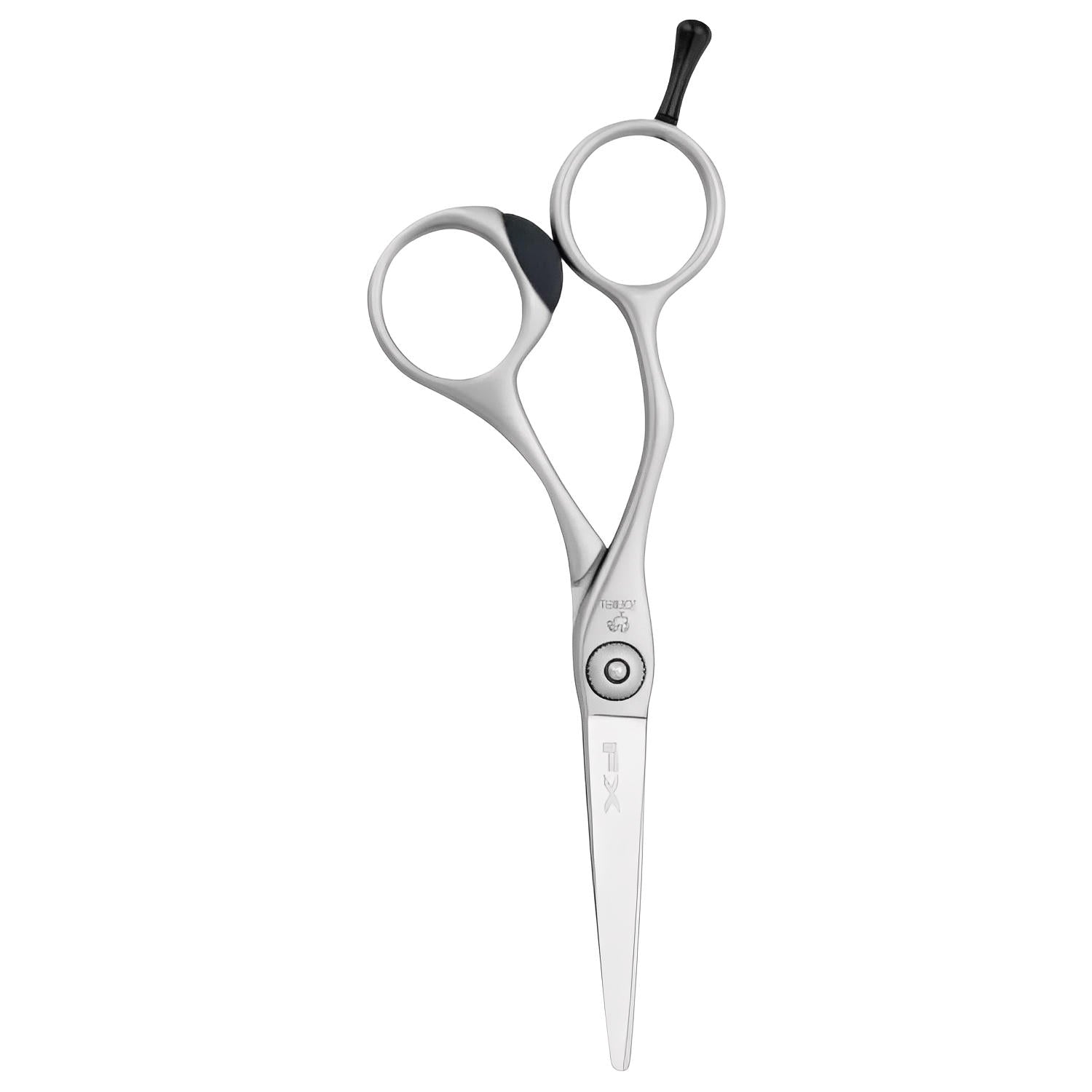
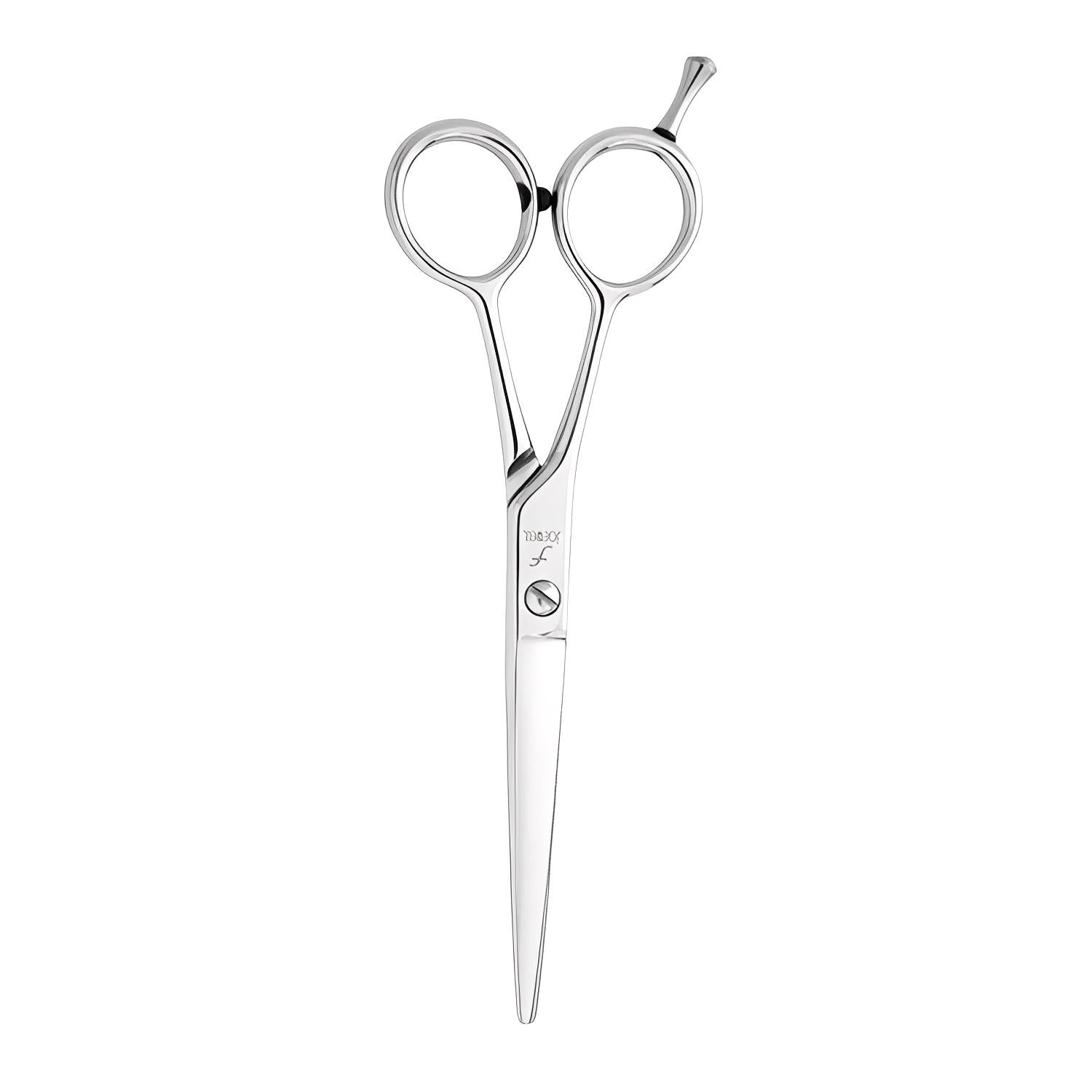
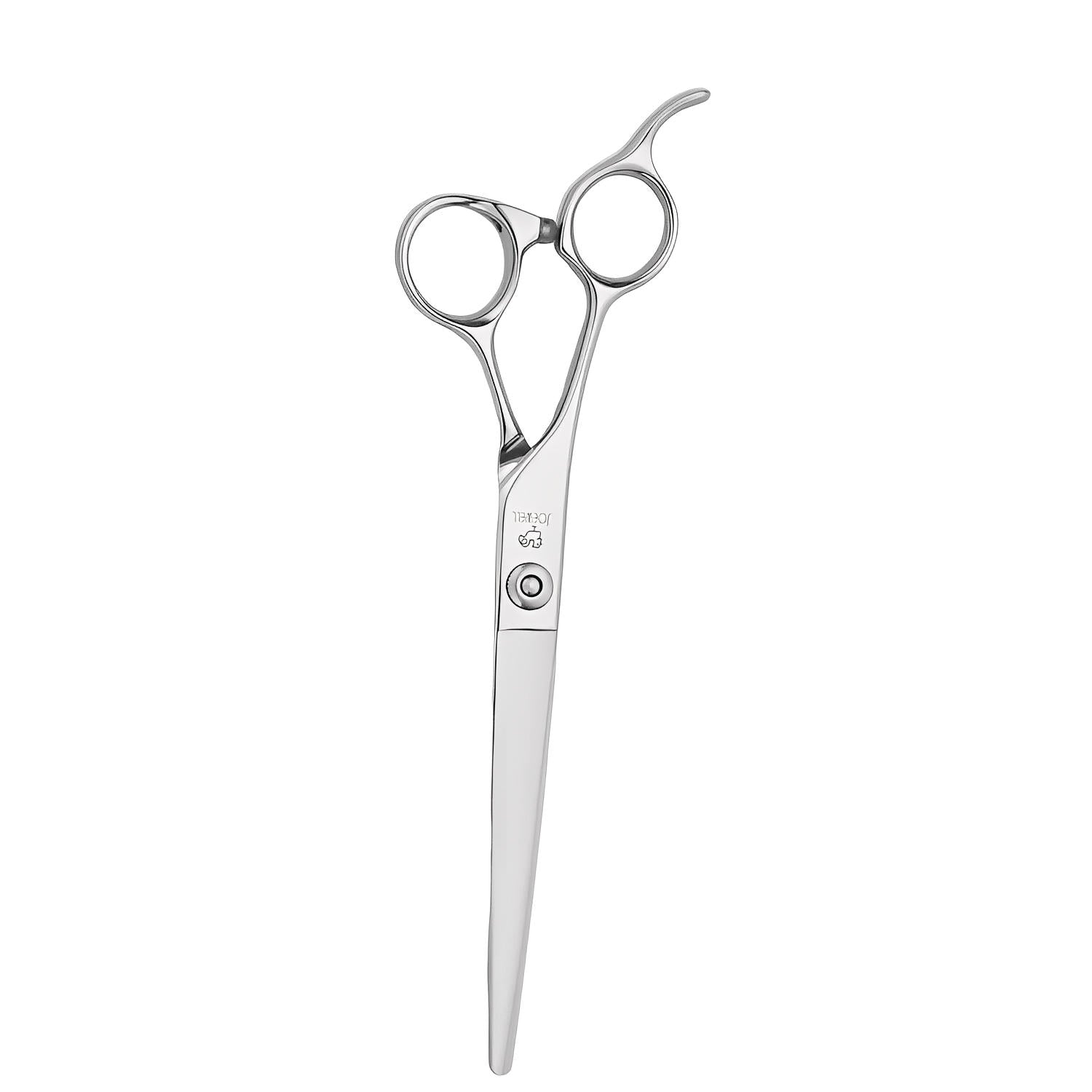
If you cut with your left hand, you've probably spent part of your training with a right-handed shear that never quite closed cleanly. That isn't your technique. A right-handed shear held in the left hand works against you, and no amount of practice fixes it. This guide explains what's different about a true left-handed shear, where to find them in our range and how to choose one with confidence.
Why a right-handed shear fights a left hand
A shear cuts because the two blades press against each other as they close. In the right hand, the natural squeeze of the thumb pushes the blades together. Switch the same shear to the left hand and that squeeze pushes the blades apart. The hair folds between them instead of being cut, and you end up pressing harder to compensate, which tires the hand and the wrist.
There's a second problem: the line of sight. On a right-handed shear held left-handed, the top blade blocks your view of the cutting line, so you're cutting a guideline you can't fully see.
What a true left-handed shear changes
A true left-handed shear is a mirror image, not a right-handed shear turned over:
- The blades are reversed, so the top blade sits on the side you can see and the thumb squeeze closes the blades together.
- The handle is shaped for the left hand, including the offset angle and the finger rest.
- The tension screw and pivot are built the other way around, so adjusting the tension feels as it should.
Flipping a right-handed shear upside down doesn't give you any of this. The blades still open the wrong way under pressure.
Left-handed shears in our range
Our left-handed shears collection gathers every model offered left-handed. They come in two kinds.
Models made only for the left hand. These have their own model names:
- the Joewell FX LEFTY, a 5.5 inch offset cutting shear;
- the Joewell LC LEFTY, in 5.0 and 5.5 inches;
- the Joewell LSF Lefty, a barber shear in 6.5 and 7.0 inches;
- the Yasaka Left-Handed Cutting Shears, in 5.0, 5.5 and 6.0 inches with a lefty offset handle.
Models with a left-handed option. Several Ichiro and Mina cutting shears, thinners and sets list a Left choice in their options. Pick Left on the product page, then choose your size. Not every size is offered in both hands, so check the sizes that stay available once Left is selected.
Choosing the size and handle
Size works the same way for left-handed stylists as for anyone else: measure the shear you're comfortable with and stay close to it. Our shear sizing guide shows how. The one difference is choice. Fewer sizes are made left-handed, so you may need to accept a quarter or half inch either side of your ideal.
For the handle, the usual advice applies:
- Offset suits most stylists who cut long days, because it lets the elbow stay lower.
- Classic or symmetric suits stylists who cut with an open, upright hand and like to turn the shear in the fingers.
Most left-handed models in our range use an offset handle. If you've trained on a classic handle, give an offset shear a week before you judge it.
Do you need a left-handed thinner too?
Yes, if you thin with your left hand. A right-handed thinner used left-handed has the same problem as a cutter: the blades push apart, and the teeth don't meet the straight blade cleanly. Several thinners in our range offer a Left option, including the Ichiro Matte Black and Rose Gold thinners and the Mina Jay, Rainbow II and Umi thinners. To learn how thinners differ from each other, read thinning shears explained.
If you're buying both at once, look at sets with a Left option. A matched left-handed cutter and thinner keep the same handle and feel in both tools.
Working beside right-handed colleagues
Sharing tools with right-handed colleagues rarely works, so keep your own shears in your own case. A few other habits help on a shared salon floor:
- Label your case clearly so nobody borrows a left-handed shear by mistake and decides it's broken.
- Ask for a station where your cutting arm has room, often the end of a row.
- When you learn a new cut from a right-handed educator, mirror the sectioning and the direction you work around the head, then check the balance in the mirror.
Ambidextrous stylists
Some stylists cut with either hand. If that's you, choose the shear for the hand you use for blunt lines and detail work, because that's where a clean close matters most. A second shear for the other hand can come later.
Before you order
Check four things on the product page: Left is selected or named in the title, the size you want is available in that hand, the handle style suits you, and the box contents list what you expect. Prices are in Canadian dollars. If you're not sure whether a model suits a left-handed cutting style, email us with the model name and your current shear's size; the address is on the contact page.