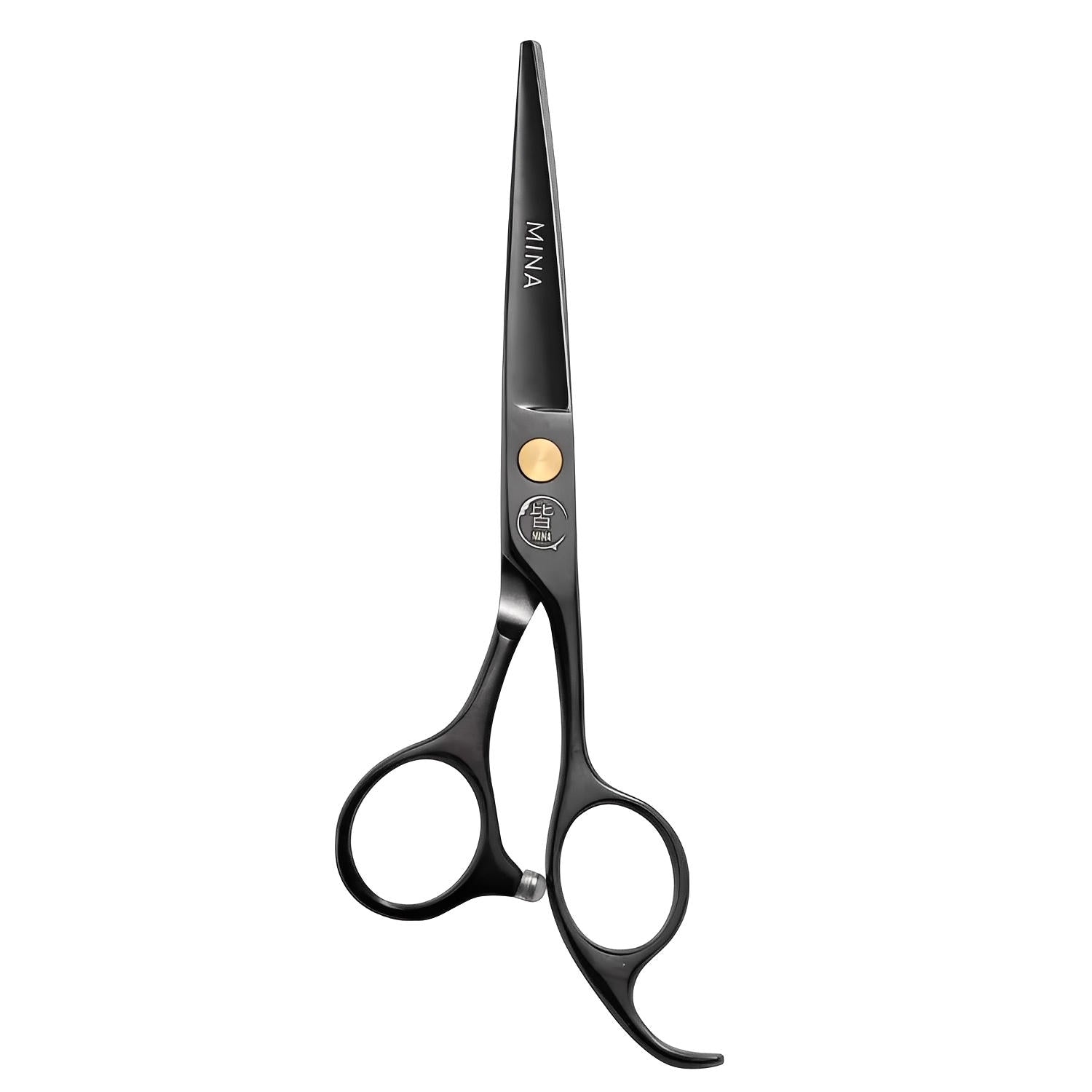
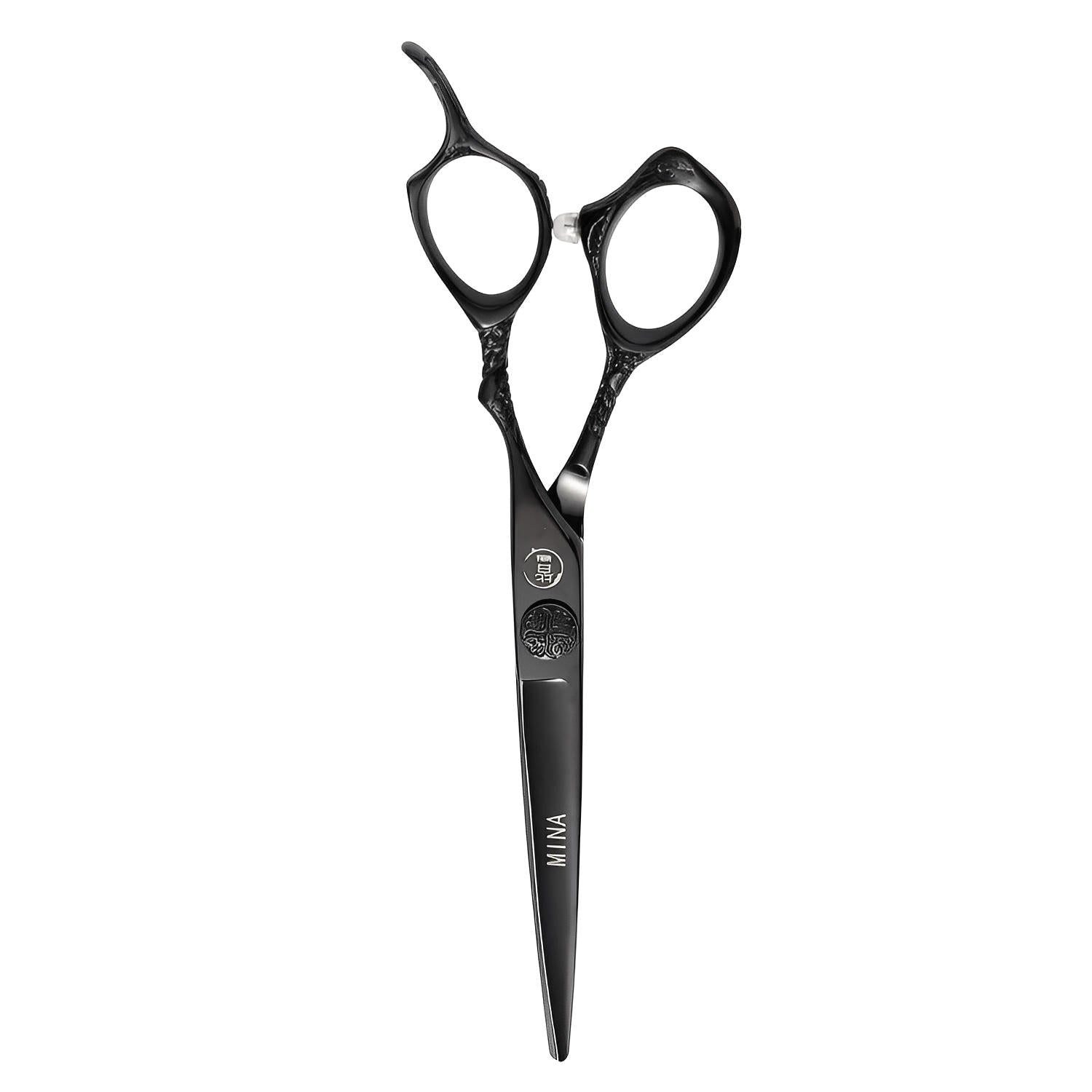
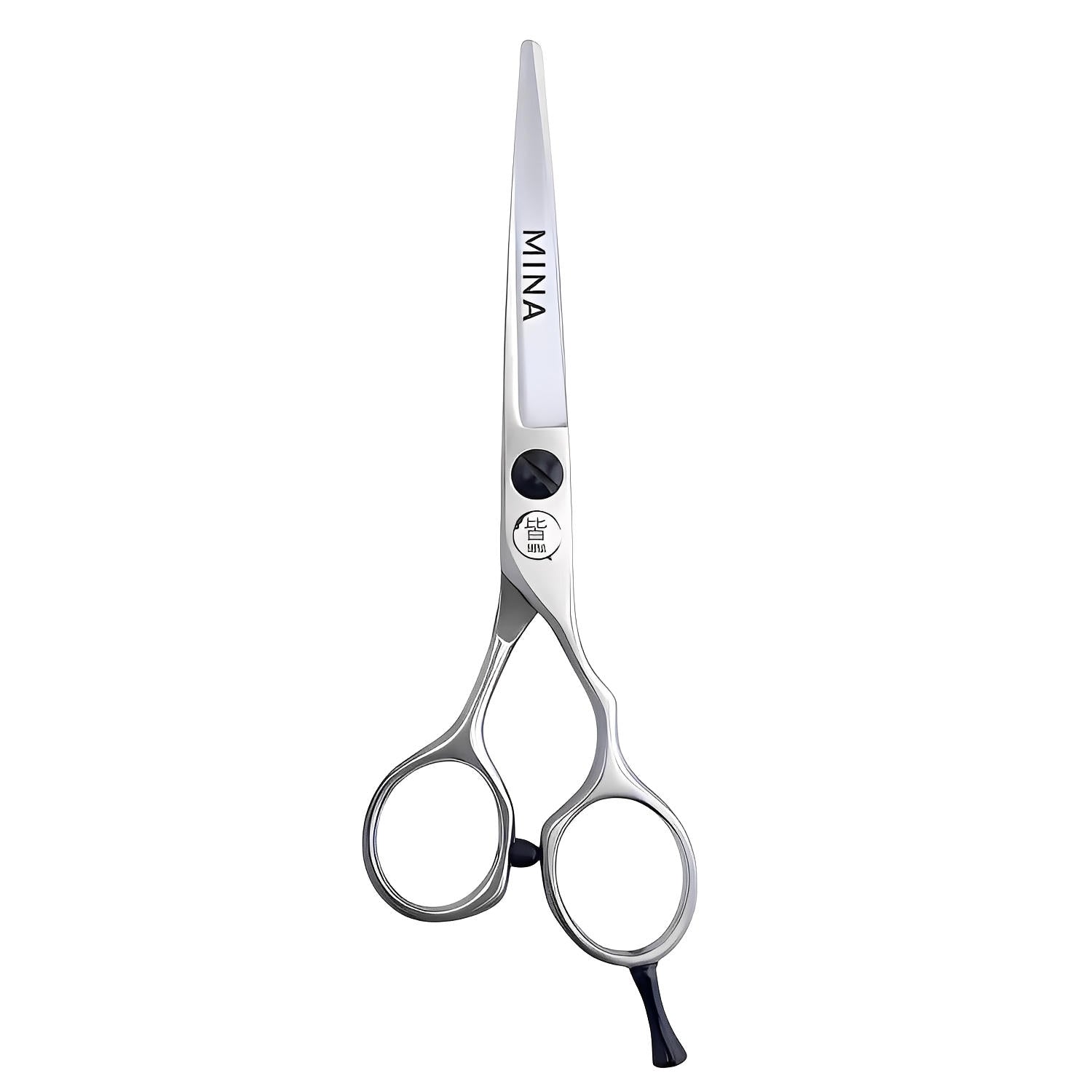
Your first professional shear is the tool you'll pick up hundreds of times a week. It doesn't need to be the most expensive pair on the shelf. It needs to fit your hand, suit the cuts you do most and stay comfortable through a full book of clients. This guide walks through the four questions that settle most first-shear decisions, in the order we'd ask them at the salon.
1. Which hand do you cut with?
Start here, because it rules out half the range. A left-handed shear isn't a right-handed shear turned over. The blades are reversed so the top blade sits on the side you can see, and the handle is shaped for the left hand. Cutting left-handed with a right-handed shear pushes the blades apart as you close them, which is why a line won't come out clean.
If you cut left-handed, look for a model listed as left-handed in its title or options. If you're ambidextrous, choose the hand you use for blunt lines and detail work.
2. How long should the blade be?
Shear length is measured from the tip of the blade to the end of the longest finger ring, in inches. Most salon stylists work with something between 5.5 and 6.0 inches. Here's how the common lengths tend to be used on the salon floor:
| Length | Where it shines |
|---|---|
| 5.0 to 5.5 inches | Detail work, point cutting, fringes and cutting around the ear. Easy to control in smaller hands. |
| 6.0 inches | The all-rounder. Long enough for layers and blunt lines, short enough for detail. |
| 6.5 to 7.0 inches | Scissor-over-comb, long straight lines and barbering work. |
The simplest test is your current shear. If you like how it feels, measure it and stay close to that length. If you keep reaching for your clippers for longer sections, a longer blade might help. If the tips feel clumsy around the face, go shorter.
3. Offset or classic handle?
The handle decides where your thumb sits and how your arm moves through the day.
- Offset handle: the thumb ring sits lower than the finger ring. Your thumb stays closer to your palm, which lets you cut with your elbow lower. Many stylists who work long days choose offset.
- Classic (even) handle: both rings sit level. It suits stylists who cut with an open, upright hand and who like to turn the shear freely in the hand.
Neither is better in general. If you've trained on one style and it feels natural, there's no need to switch. If your shoulder or elbow feels raised by the end of the day, an offset handle is worth trying.
4. What does it need to do?
Be honest about the cuts you do most this year, not the ones you might do one day.
- Mostly cutting lines and layers: start with a cutting shear in your length. That's the tool you'll use most.
- Lots of thick hair or textured finishes: add a thinning shear. The tooth count on the product page tells you how much hair each close removes. More teeth take out less hair per close, and fewer, wider teeth take out more.
- Setting up a whole station: a cutter and thinner set from one maker keeps the two shears feeling the same in your hand. Our guide to building a salon kit on a budget covers that in more detail.
Checking the details before you order
Once you have a shortlist, open each product page and check four things: the hand, the length, the handle type and what comes in the box. If a model comes in several lengths, choose the length in the options before adding it to your cart.
Prices on this store are in Canadian dollars. Orders ship to every province and territory, and checkout shows the delivery charge and an arrival estimate before you pay. If you'd like a second opinion on fit, email us with the exact model and the length you're considering. The address is on the contact page.
When you're ready, browse the full range or start with a maker collection.