A salon kit doesn't have to be bought all at once. Most stylists build theirs over a year or two, adding a tool when the work calls for it. The trick is to put your money where you'll feel it every day, and to choose pieces that work together. This guide covers what to buy first, what can wait, and how to keep the kit matched as it grows.
Start with the shear you use most
For most salon stylists, that's a cutting shear of around 5.5 or 6.0 inches. You'll use it on nearly every client, for lines, layers and detail. If the budget only stretches to one good tool this year, make it this one. Our guide to choosing your first salon shear helps you pick the hand, length and handle.
It's better to have one shear that fits you properly than three that don't. A cutter that's too long or too heavy for your hand slows you down and tires your wrist, however good the steel is.
Add a thinner when the work calls for it
A thinning shear earns its place when you're regularly blending, softening weight lines or reducing bulk in thick hair. If most of your clients have fine hair or blunt cuts, it can wait.
When you do buy one, look at the tooth count on the product page:
- More, finer teeth take out a little hair with each close. Good for blending and softening.
- Fewer, wider teeth take out more hair per close. Good for removing bulk and adding texture.
If you're not sure, a finer-tooth thinner is the safer first choice. It's harder to take out too much hair by mistake.
When a set makes sense
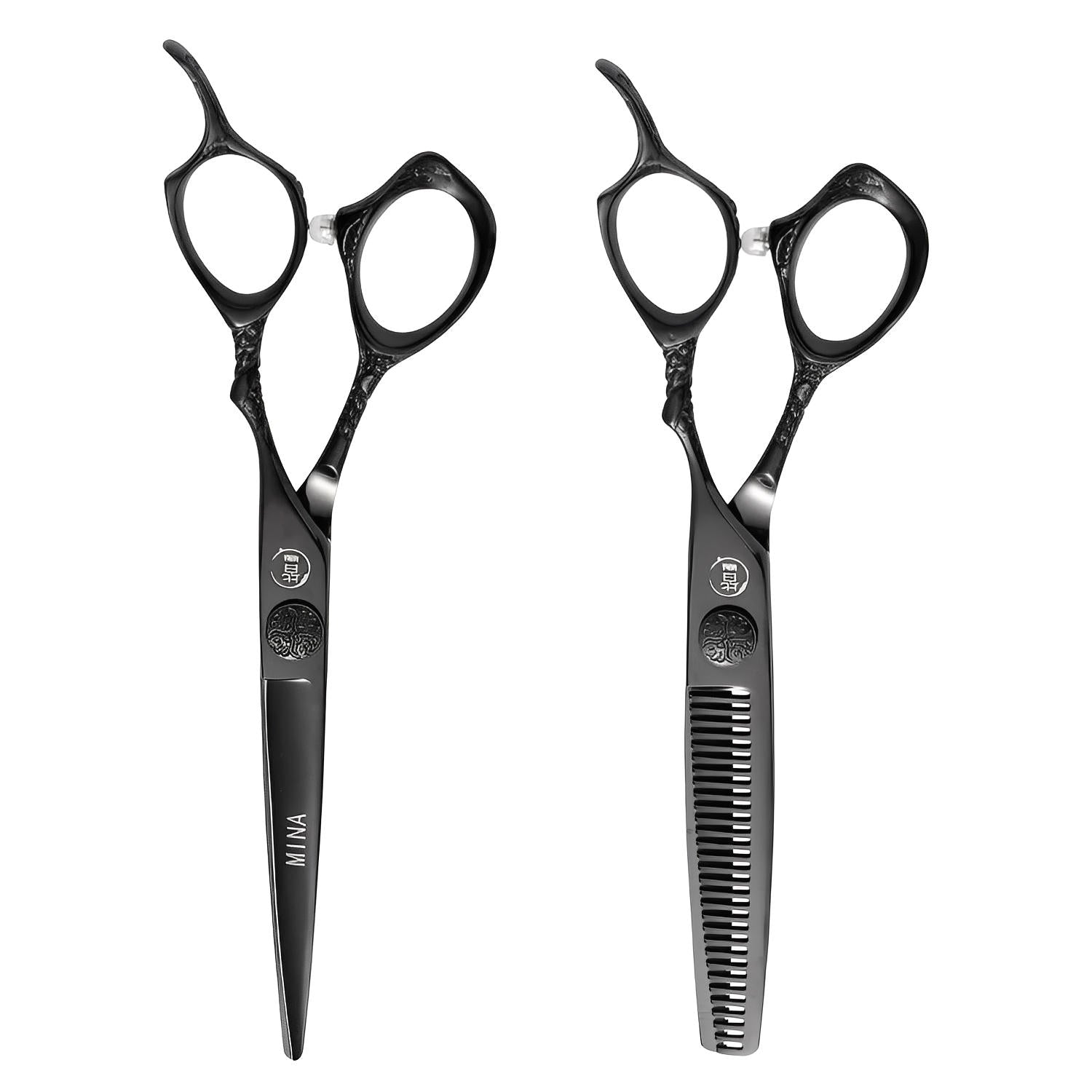
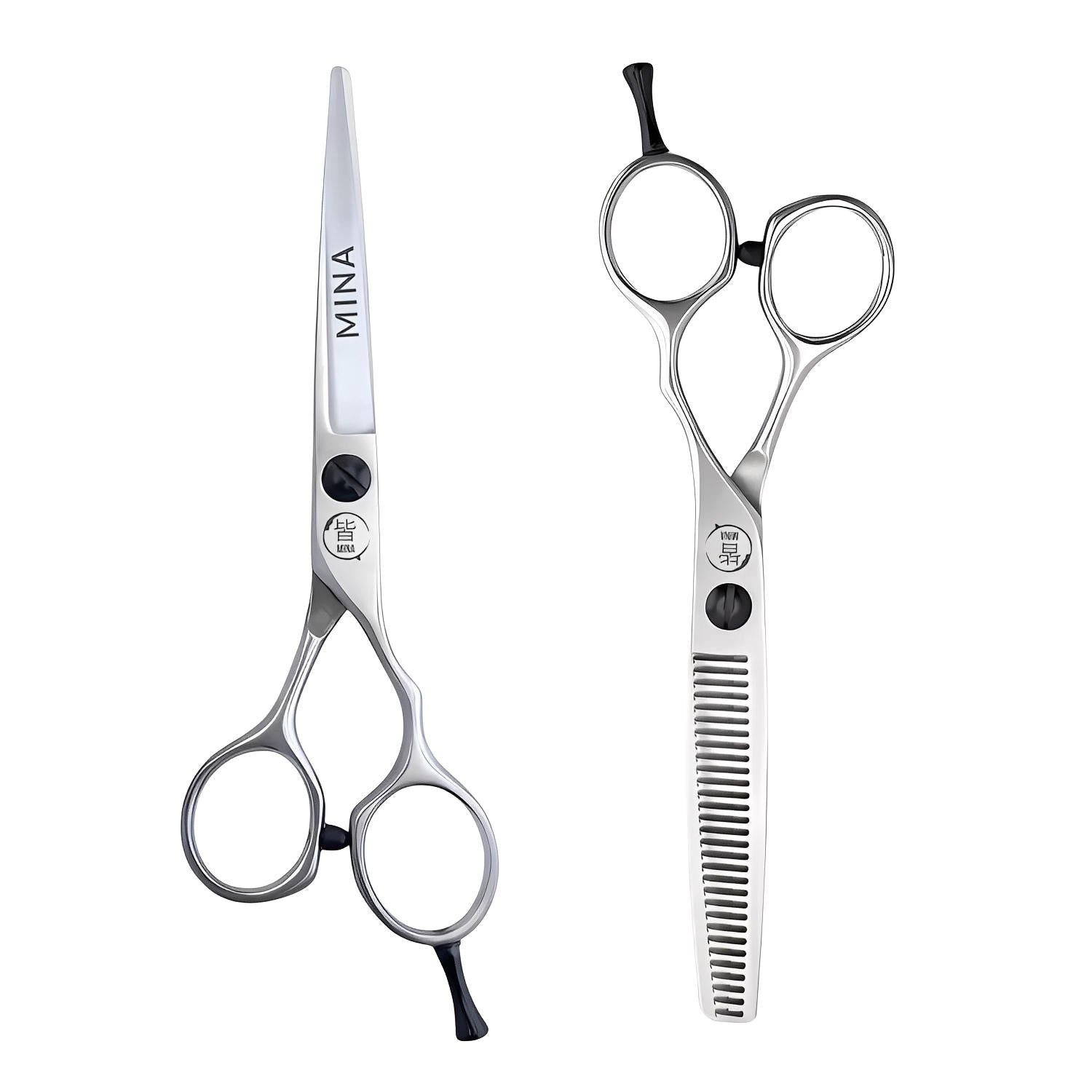
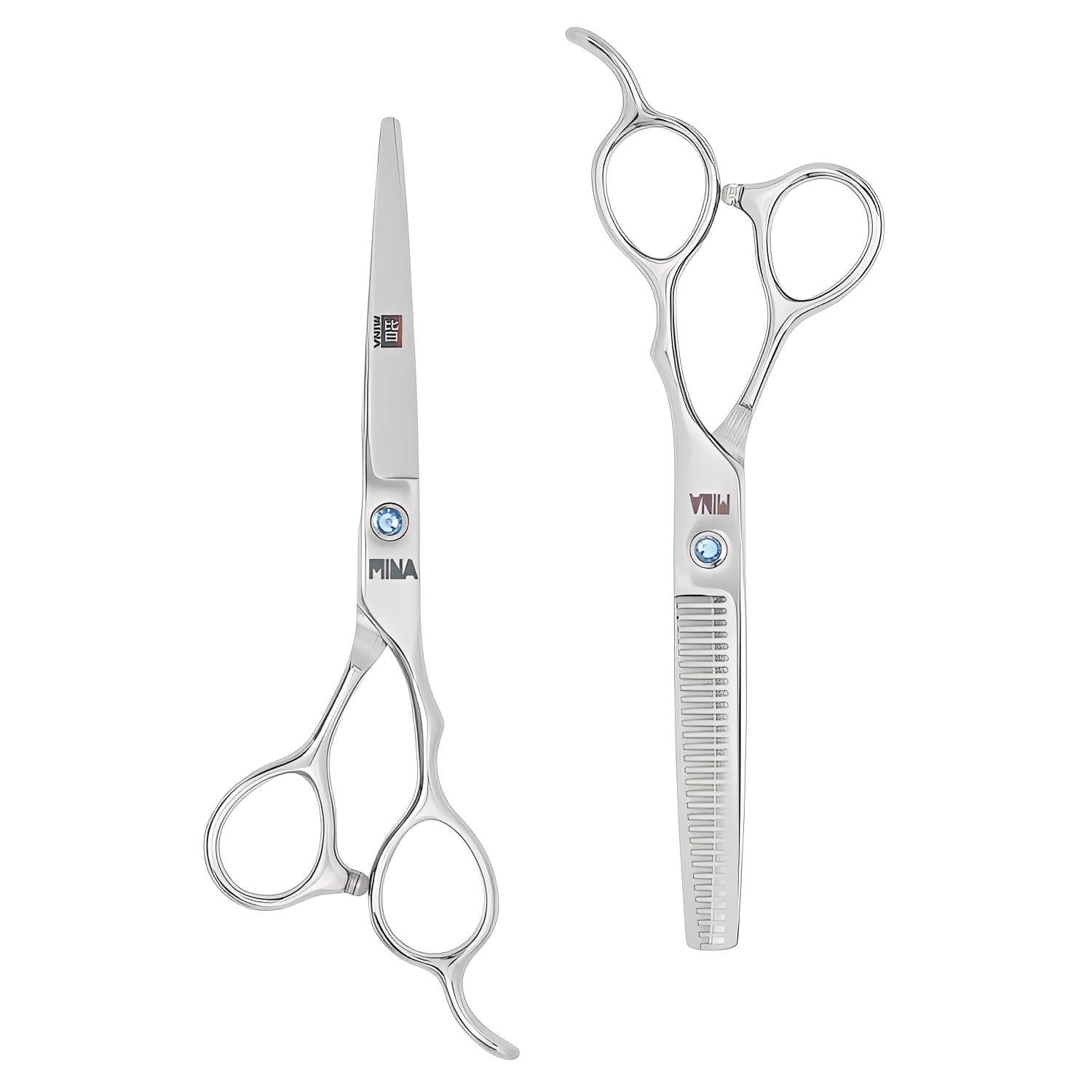
A cutter and thinner set from one maker gives you two shears with the same handle shape, finish and feel. It suits:
- new graduates setting up their first station;
- stylists replacing a worn kit all at once;
- salon owners kitting out a new team member.
Sets on this store are listed with both pieces and their lengths. Check the hand and length of each shear in the set, because a set is only good value if both pieces suit you. If you already own a cutter you love, buying a thinner on its own often makes more sense.
The small things that protect the investment
Some of the most useful kit costs very little:
- a hard or padded case, so the edges aren't knocked in your bag;
- scissor oil and a soft cloth for the daily routine;
- the tension key that came with your shear (keep it in the case).
Our winter care guide has a five-minute routine that keeps these tools working.
A sensible order to buy in
| Stage | Add | Why |
|---|---|---|
| Starting out | One cutting shear that fits your hand | You'll use it on nearly every client. |
| Busier book | A thinning shear | For blending and thick hair. |
| Specializing | A second cutter in a different length | A longer blade for scissor-over-comb, or a shorter one for detail. |
| Left-handed or barbering work | A specialist shear | When the work genuinely needs it. |
Buying for a team
If you're a salon owner buying for staff, ask each stylist which hand they cut with and which length they use now before you order. A shared kit only works if everyone can use it comfortably. Shears are personal tools, and most stylists prefer their own.
Ordering
Prices are in Canadian dollars, and orders ship to every province and territory. Checkout shows the delivery charge and an arrival estimate before you pay. If a shear you want shows as backorder, it ships once stock arrives. Questions about a set's contents or lengths? Email us with the product name, and we'll check it for you. The address is on the contact page.
Ready to start? Browse the sets or compare the maker collections.